
Last updated November 15, 2026
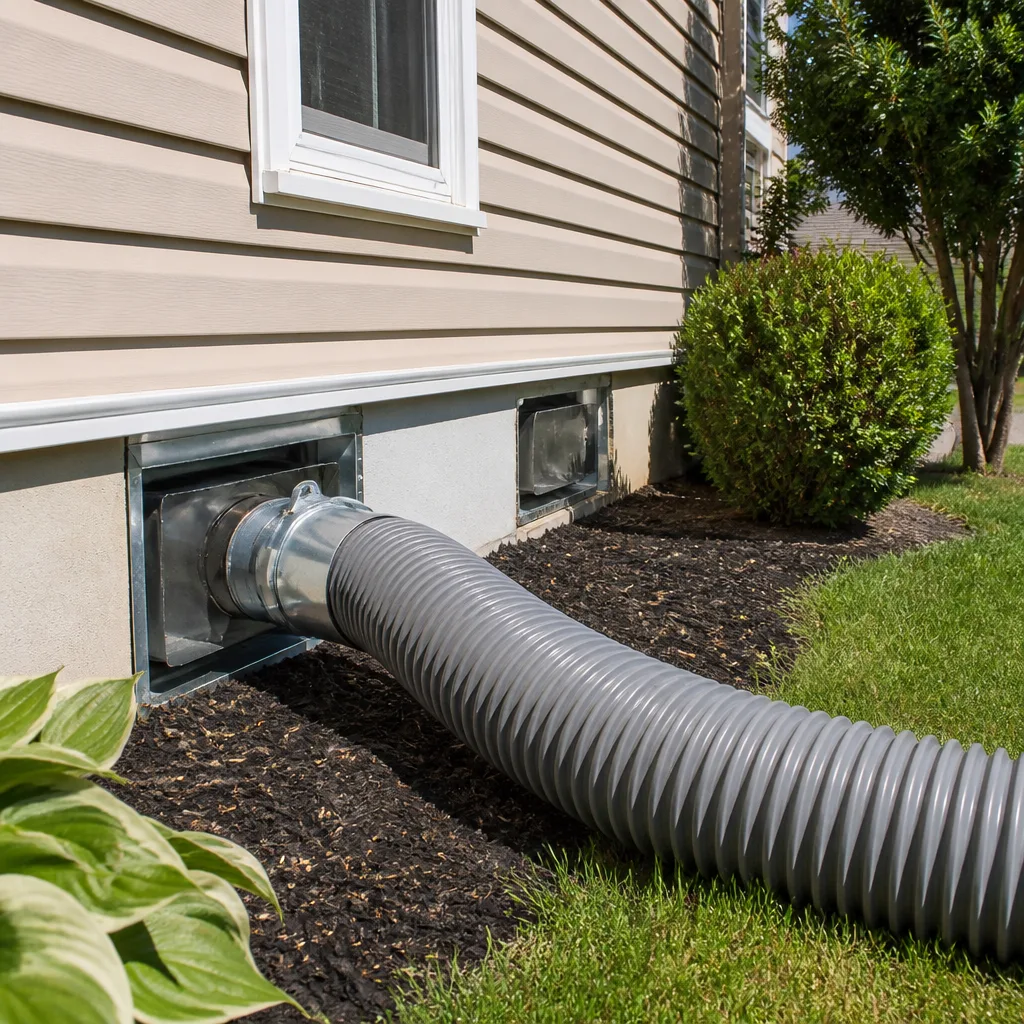 Whole-home duct cleaning
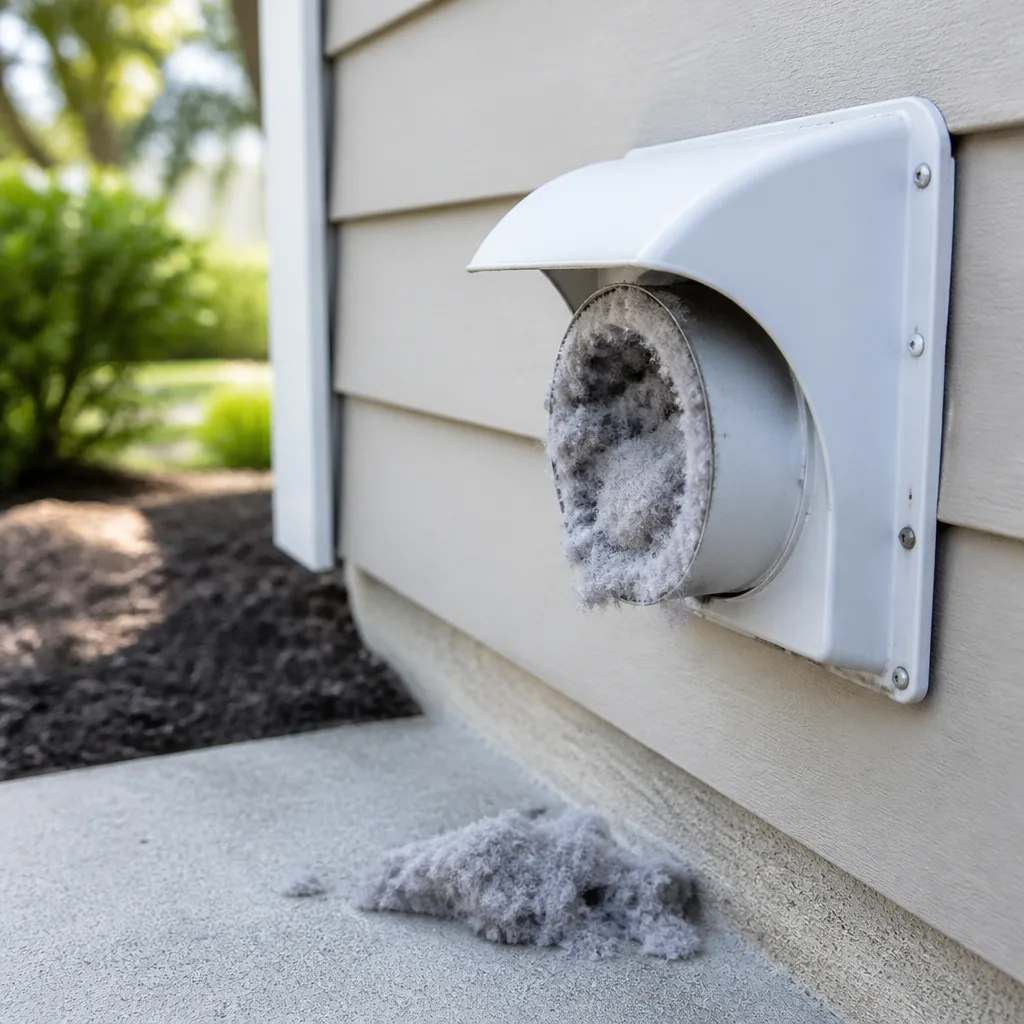 Dryer vent cleaning
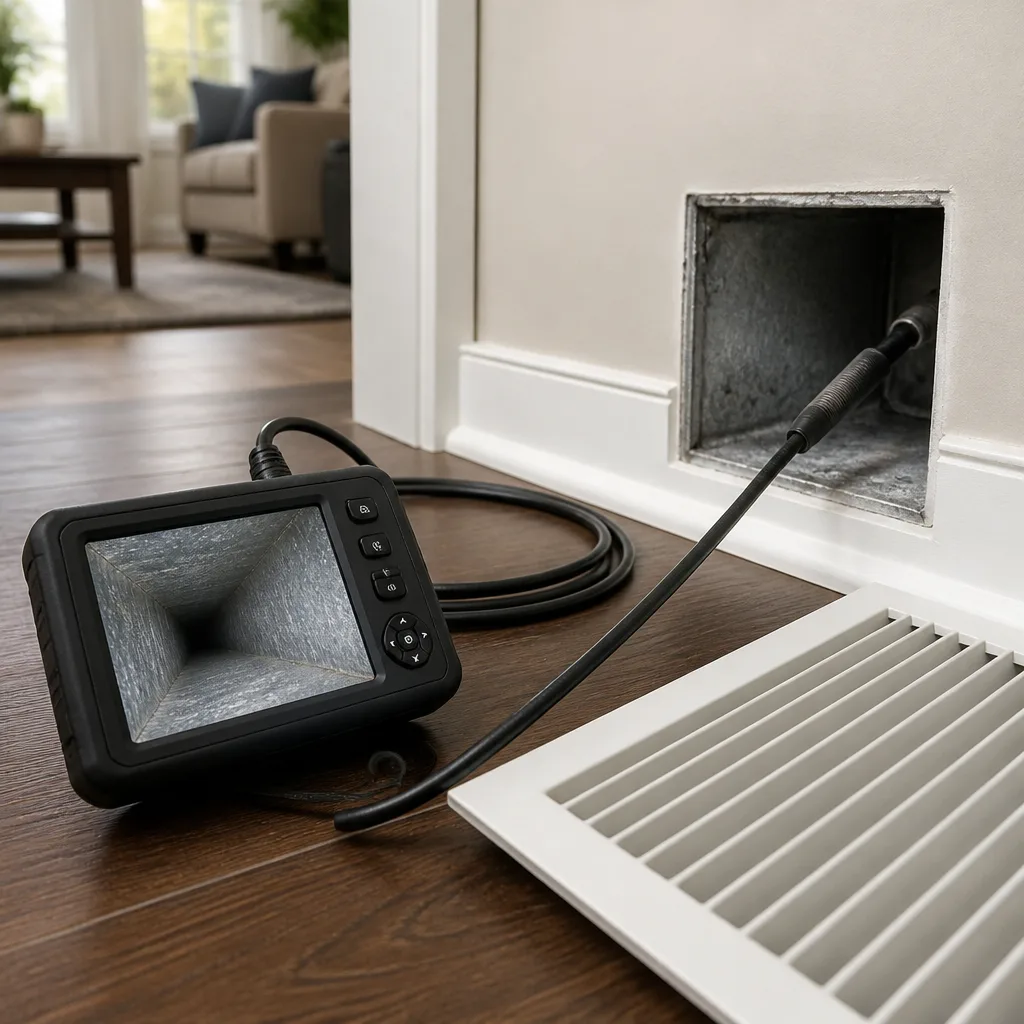 Camera inspection
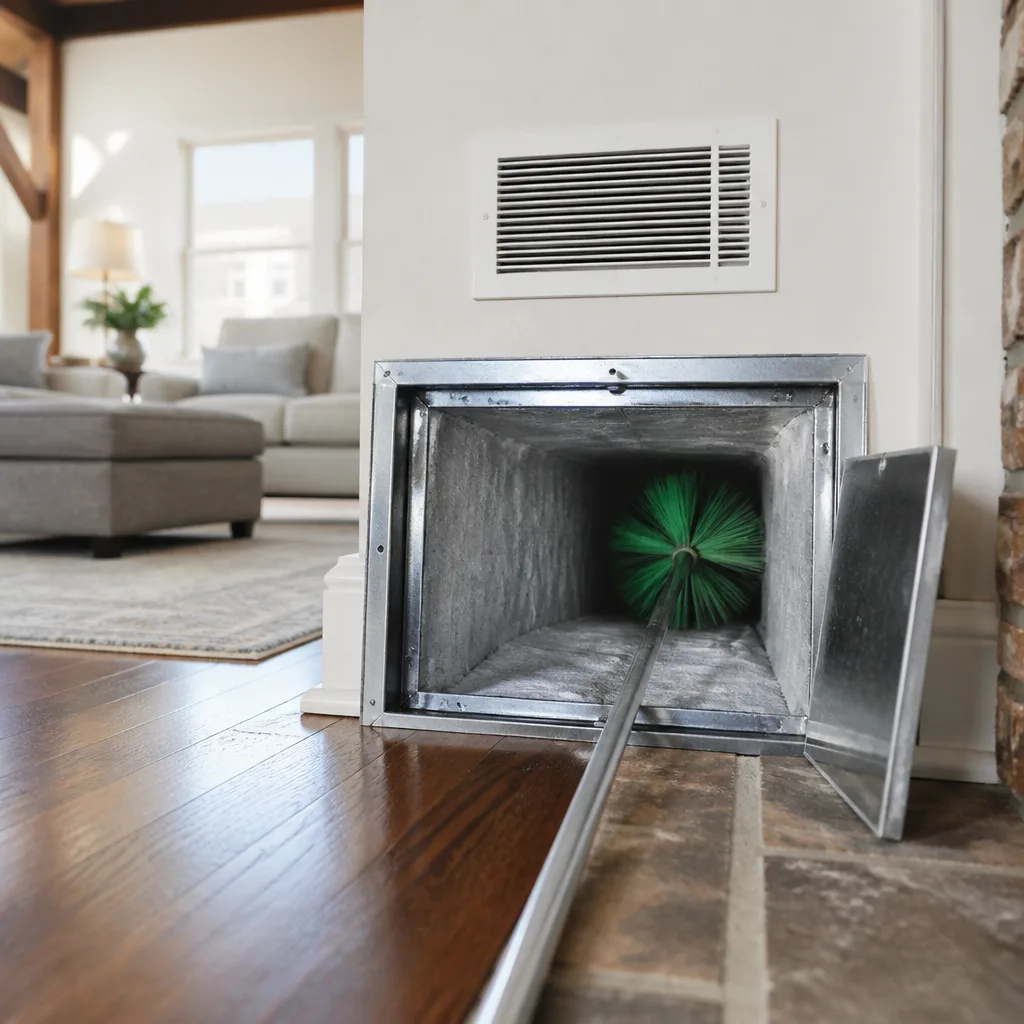 Sanitizing & deodorizing
Whole-system duct and dryer vent check with before-and-after photos - you see exactly what came out of your vents
That "$99 whole-house special" is a bait ad - the real number appears once they are in your hallway, or the "clean" is a shop-vac at the register. We photograph the inside of your ducts before and after instead.
DIY vs Professional Air Duct Cleaning: The Manchester Homeowner’s Decision Guide
Most homeowners weighing DIY against professional air duct cleaning in Manchester frame it as a money question. It isn’t. It’s a physics question. A shop vac pulling on a register grille can’t overcome the air infiltration that leaks into every joint, boot and return of a typical system, so the debris sitting in your main trunk line doesn’t travel toward the hose. It just shifts a few inches and settles somewhere else. This guide explains what actually moves dust out of a duct system, what you can safely handle yourself in Manchester, what a rental unit can and can’t do, and how to tell the difference between a single spill you can clean up and system-wide buildup that needs real equipment.
Quick Answer
You can clean register grilles, wipe visible surfaces near branch openings, and brush the appliance end of your dryer vent yourself. You cannot meaningfully clean the inside of a duct system with consumer equipment, because a shop vac generates roughly 1 to 2 inches of water column of negative pressure while professional duct cleaning equipment in Manchester homes generates 8 to 12 inches. That pressure gap, combined with brush agitation and a sealed vacuum connection, is what separates redistribution from extraction. If debris is confined to one register, DIY is reasonable. If you’re seeing buildup throughout the system, it’s a professional job.
Styles & brands we work with
- Whole-home duct cleaning
- Dryer vent cleaning
- Camera inspection
- Sanitizing & deodorizing
Table of Contents
- Why Negative Pressure Is the Whole Story
- What You Can Actually Do Yourself
- What DIY Attempts Commonly Make Worse
- When DIY Is the Right Call: The Single Contamination Event
- Rental Equipment: What’s Available and What It Can’t Do
- The Honest Cost Comparison
- Manchester Housing Stock and Duct Reality
- How to Verify anyone’s work, including your own
Why Negative Pressure Is the Whole Story
Duct cleaning works on a simple principle: put the entire system under strong negative pressure with a sealed connection at one end, then agitate the debris loose from the other end so it has no choice but to travel toward the vacuum. Every part of that sentence matters, and the pressure figure matters most.
Think about a 10-inch main trunk line running through the basement of a Manchester home. It holds a large volume of air, and that air resists being moved. On top of that, ducts are not airtight. Return and supply joints leak, boot connections at the floor are rarely perfect, and older systems in this region often have gaps where a previous renovation disturbed the framing. When a 2.5-inch shop vac hose is placed over a register, all of that open air around the system has to be pulled through the register first. The available pressure gets spent on that infiltration long before it reaches the trunk.
Professional systems work differently. An air duct cleaning job involves connecting a high-powered vacuum to a dedicated access point, blocking off the rest of the system, and adding a rotating brush or air whip to agitate every surface inside the duct. The strong negative pressure keeps the loosened debris in suspension and moving toward the collection point rather than settling back onto the walls.
- Shop vac typical pressure: roughly 1 to 2 inches of water column
- Professional truck- or unit-mounted vacuum: roughly 8 to 12 inches of water column
- Why the difference matters: only the higher figure overcomes ambient air infiltration and keeps heavy debris (drywall dust, construction grit, pet hair, insulation fibers) in the air stream
This is why our team uses Rotobrush and Nikro systems, both professional-grade platforms with sealed vacuum connections and real agitation tools. They aren’t bigger shop vacs. They’re built around the pressure and agitation architecture that a duct system actually requires.
What You Can Actually Do Yourself
There’s real, legitimate maintenance work a Manchester homeowner can do without any special equipment, and doing it consistently reduces how often the deeper cleaning is needed. Here’s where your own hands are the right tool.
- Remove and wash the register grilles. Pop the grille off the wall or floor, wash it in the sink or with a hose, dry it thoroughly, and put it back. Grille dust is the most visible duct dust, and it’s the easiest to remove.
- Wipe the visible interior at each branch opening. Reaching in a few inches from each register with a damp cloth picks up dust the vacuum has thrown to the edges. Don’t push past the boot; you’re cleaning what you can see and touch, not the branch itself.
- Clean the return grille and filter housing. A dirty return filter clogs with the same dust the ducts carry. Changing it regularly keeps more debris from going back into the system.
- Disconnect the dryer vent and brush the appliance end. Pull the dryer out, disconnect the vent, and clear the short run of lint that collects at the appliance end with a flexible brush. This is a real fire-safety task and worth doing periodically.
- Vacuum the floor and wipe surfaces around the registers. This keeps ambient dust from being pulled straight back into the supply when the furnace or AC runs.
Those steps are genuinely useful. None of them require special equipment. All of them make professional cleaning less urgent and less frequent. What they don’t do is move the accumulated load out of your main trunk line, and that’s where the honest limits begin.
What DIY Attempts Commonly Make Worse
The bigger risk with DIY in a Manchester home isn’t that it does nothing; it’s that a determined attempt with the wrong tool can actively damage the system. We’ve seen the results, and the repair bill is usually more than the cleaning would have been.
- Pushing debris deeper into the system. A shop vac pulling against an unsealed system can leave loose dust in the branch lines, then a blower or a leaf-style unit turns it into an aerosol that settles in the furthest reaches or drops it onto the coil and blower.
- Breaking flex duct connections at the plenum. Flex duct is common in Manchester homes built or renovated in the last couple decades, and it’s held together with zip ties and tape at the plenum. A shop vac nozzle snagged on a fitting can disconnect the joint, and a disconnected supply duct is far worse for air quality than a dirty one.
- Dislodging the interior lining of rigid duct. Some older duct systems have internal fiberglass liner or painted interior surfaces. Aggressive brushing from a homeowner snags on torn liner and pulls it loose, sending fiberglass fibers through the entire system.
- Turning on the HVAC after the attempt. Homeowners often run the system to “clear it out.” That distributes the disturbed dust through every supply register and into occupied rooms, which is exactly what you were trying to avoid.
- Doing the work without capturing the debris. Without negative pressure at the collection end, whatever gets loosened has to go somewhere. In practice it goes back into the house.
Our Grafton Air Duct Cleaning approach starts with a full assessment of your duct system before any hose or brush goes into a duct, precisely because the fix for a damaged connection is different from the fix for accumulation. Sometimes the right move is repair, not cleaning. Cleaning a system with a broken or disconnected duct just re-contaminates it.
When DIY Is the Right Call: The Single Contamination Event
There is a clear scenario where you should never call anyone. You knocked over a bucket of drywall dust next to a floor register, or a renovation dropped debris into one return, or a pet accident landed in a grille. That’s a single contamination event confined to one location, and it’s within reach of homeowner tools.
What a reasonable DIY response looks like for a single event:
- Turn the HVAC system off at the thermostat. Don’t run the fan.
- Remove the affected grille and wash it.
- Vacuum the visible debris from the branch opening with a crevice tool, holding the vacuum still and pulling slowly rather than scrubbing.
- Wipe the interior surface you can reach with a damp cloth.
- Let everything dry completely, replace the grille, and then run the system.
The key difference between this scenario and a full-cleaning job is scope. One spill, one register, one visible contamination. If you can see the boundary of the problem, you can clean up to that boundary yourself. If you can’t see the boundary, if dust is showing up in every supply register, if there’s visible debris inside the trunk, or if the house has been through a renovation that generated system-wide dust, then a start-and-stop homeowner approach won’t clear it. That’s where professional extraction earns its place.
Rental Equipment: What’s Available and What It Can’t Do
Manchester-area rental centers and home improvement stores do rent duct cleaning equipment, usually a unit built around a shop-vac body with a longer hose and a small brush attachment. It’s worth being honest about what that gear does.
- It’s real equipment, not a toy. A rental unit generates more suction than a pulled-out household shop vac, and it usually comes with a rotating brush that fits into a register and reaches a few feet into a branch.
- It still can’t pressurize a system. Without a sealed connection at a main-line access point and blockoff at the far ends, the negative pressure still escapes through every joint and boot. You’re cleaning the branch, not the trunk.
- The hose length is the limit. Most rental hoses reach a branch and a short run beyond. Main trunks and the plenum connection are typically out of reach.
- No camera verification. You can’t actually see whether the debris came out of the branch or just moved a foot further, so you have no way to know the work was done.
So the honest answer on rental equipment is: it’s fine for one-off spills and a light touch-up at one register, and it’s not a substitute for what a professional system does. That’s not a knock on the tool. It’s a fair statement of its design. Rental units are built for a homeowner cleaning up a small mess, and they do that job.
The Honest Cost Comparison
The math on DIY versus professional is not as simple as “shop vac is free.” Compare the real paths side by side. Every price below is a typical estimate for a Manchester job and should be treated as a range, not a quote. The written estimate always sets the final number.
- Rental unit for a long weekend: typically around $80-$150 per day, plus the time to pick up, return, and spend an afternoon crawling through registers.
- Consumer equipment you keep: a shop vac and attachments run roughly $80-$200. Replacement filters add up because fine drywall dust and pet hair clog them quickly.
- Professional whole-system cleaning in Manchester: typically $350-$600 for a standard single-family home, depending on the number of registers, the system layout, and how much accumulation there is. Larger homes or heavy post-renovation accumulation run higher.
- Air duct repair (if needed): a disconnected or damaged duct typically runs $150-$500 to fix, depending on access and materials.
- Dryer vent cleaning: typically $120-$220, done as its own service or bundled into a full appointment.
The rental path looks cheaper at first glance, but it only makes sense if it actually cleans what needs cleaning. When it doesn’t, you’ve spent the money, spent the afternoon, and the system still needs professional work. That’s a net loss. If a single spill is your true scope, the rental unit is a reasonable buy. If it’s the whole system, it isn’t.
One thing our category does poorly is pricing confusion. The bait-and-switch reputation in duct cleaning comes from per-vent teaser pricing that balloons once a technician is on site. We don’t run that model. Every job is one flat price for the whole system, agreed in writing before any work starts, with before-and-after photos of your own ducts so you can see the difference yourself.
Manchester Housing Stock and Duct Reality
Air duct questions in Manchester are shaped by the housing stock, and it varies more than people expect. Neighborhoods west of downtown, older sections near the river, and long-established pockets around the city center include homes from several different renovation eras. Some have original duct systems with rigid metal runs designed decades ago. Others had flex duct retrofitted, or a heat pump system added later with new runs tie-wrapped into the old framework. Those combinations change what cleaning actually involves.
Flex duct is common in the newer additions, and it has specific vulnerabilities. A cleaning tool that’s too aggressive can pull the inner liner away from the corrugated walls, permanently reducing the duct’s airflow. A shop vac nozzle can catch a support strap and disconnect the joint. That’s the primary reason we don’t recommend homeowner tools going deep into flex duct runs: the risk of damage is real, and the cost of a repair is not trivial.
The New Hampshire climate also matters. Heating-season dust is different from cooling-season dust. Homes that run a furnace hard through January and February accumulate fine, dry debris that clings to duct walls. Add a wood stove, a pellet insert, or a pellet stove in a Manchester basement, and the dust carries combustion particulates that don’t respond to a shop vac at all. Households with pets, recent renovations, or a family member with allergies often find the accumulation shows up faster than they expected.
If you want a broader picture of how the work is done in the area, our Suncook pages cover the same process for nearby homeowners.
How to Verify Anyone’s Work, Including Your Own
The hardest part of duct cleaning isn’t running the equipment, it’s knowing whether the equipment actually did the job. Professional cleaning is verifiable. DIY usually isn’t. That difference matters more than most people realize.
Verification in a professional setting usually involves:
- Before-and-after photos taken inside the ducts, ideally from the same points.
- Camera inspection of the main trunk line before and after work.
- A written description of what was cleaned and any areas that needed repair, plus why.
- Notice of any compromised connections found along the way, so you know if the system is sealed or not.
Self-verification is much harder. You can look at the register openings and see that they’re cleaner, but you can’t see the trunk. You can vacuum up what came out of the branch, but you can’t tell whether debris at the main line was loosened or just displaced. This is exactly why our written estimate, our before-and-after photos of your own ducts, and our flat-price-per-system model exist. The point of professional service isn’t just the cleaning. It’s being able to confirm the cleaning happened.
If you also want to address the safety side of your system while the ducts are being handled, we offer dryer vent cleaning as a dedicated service, and it’s the single highest-value maintenance item a homeowner can schedule without any system-cleaning overlap. Lint buildup in a dryer vent is a recognized fire hazard in any home, and the same systematic approach we use for duct work applies to it.
Common Mistakes to Avoid
- Renting a duct cleaning machine expecting trunk-line results. Rental units are built for branch-level work and one-off spills. If the whole system is loaded, you’ll spend the rental money and still need a professional job.
- Running the HVAC system right after a DIY attempt. It distributes the dust you just loosened to every room in the house. Turn the system off and let professional work finish the job instead.
- Snagging flex duct with a shop vac nozzle. The zip-tie connections at the plenum are the most common break point. A disconnected supply duct can pull attic or cavity air straight into the living space.
- Going into ducts near a wood stove without checking the liner first. Combustion byproducts and creosote-adjacent debris are a different category of contamination and need assessment before anyone, homeowner or professional, goes in.
- Assuming air duct cleaning and dryer vent cleaning are the same job. They’re separate services on separate systems in Manchester homes, and the dryer vent is the more time-sensitive of the two from a safety standpoint.
- Accepting a per-vent price quote upfront. That’s the structure that leads to bait-and-switch pricing. Ask for a flat, whole-system price in writing before any work starts.
- Skipping the return filter change. A clean system with a clogged filter goes right back to clogged. Change the filter when you clean the system, not months later.
See the difference
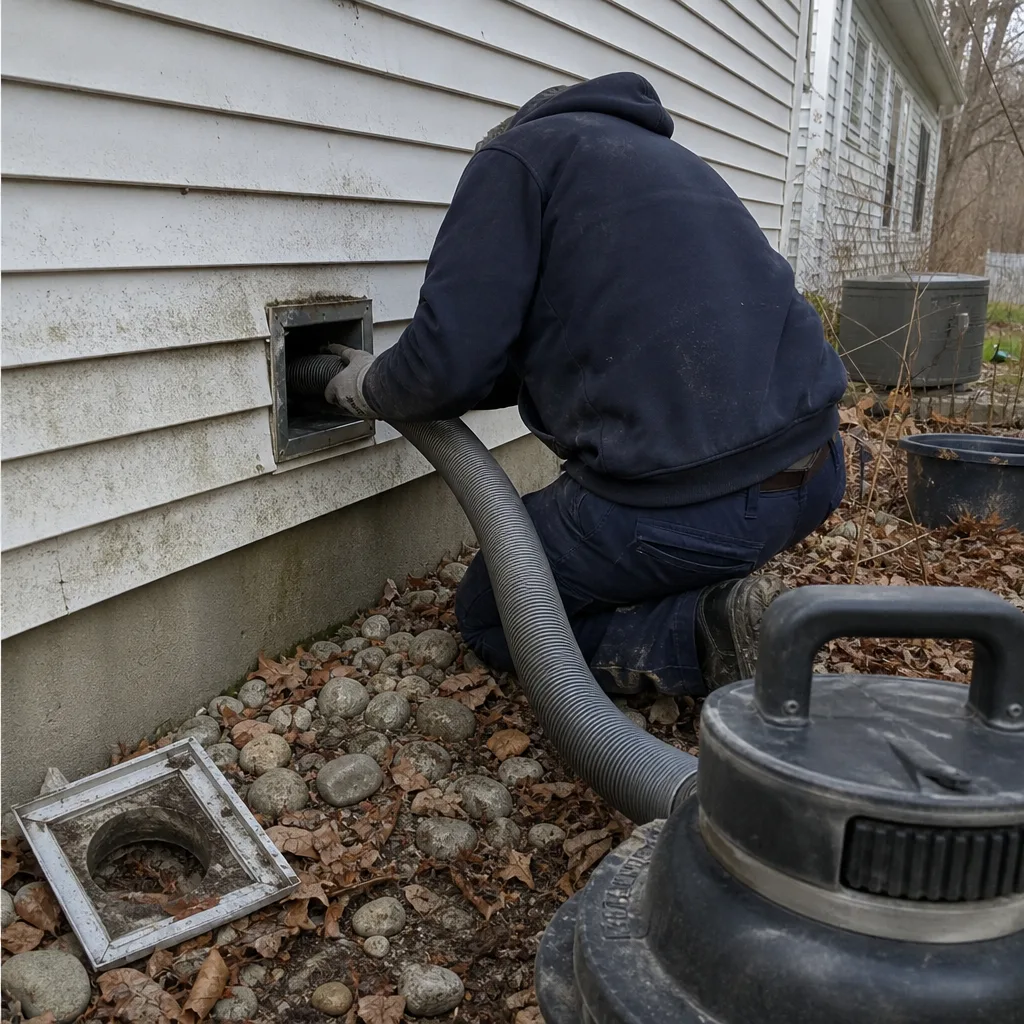 Before
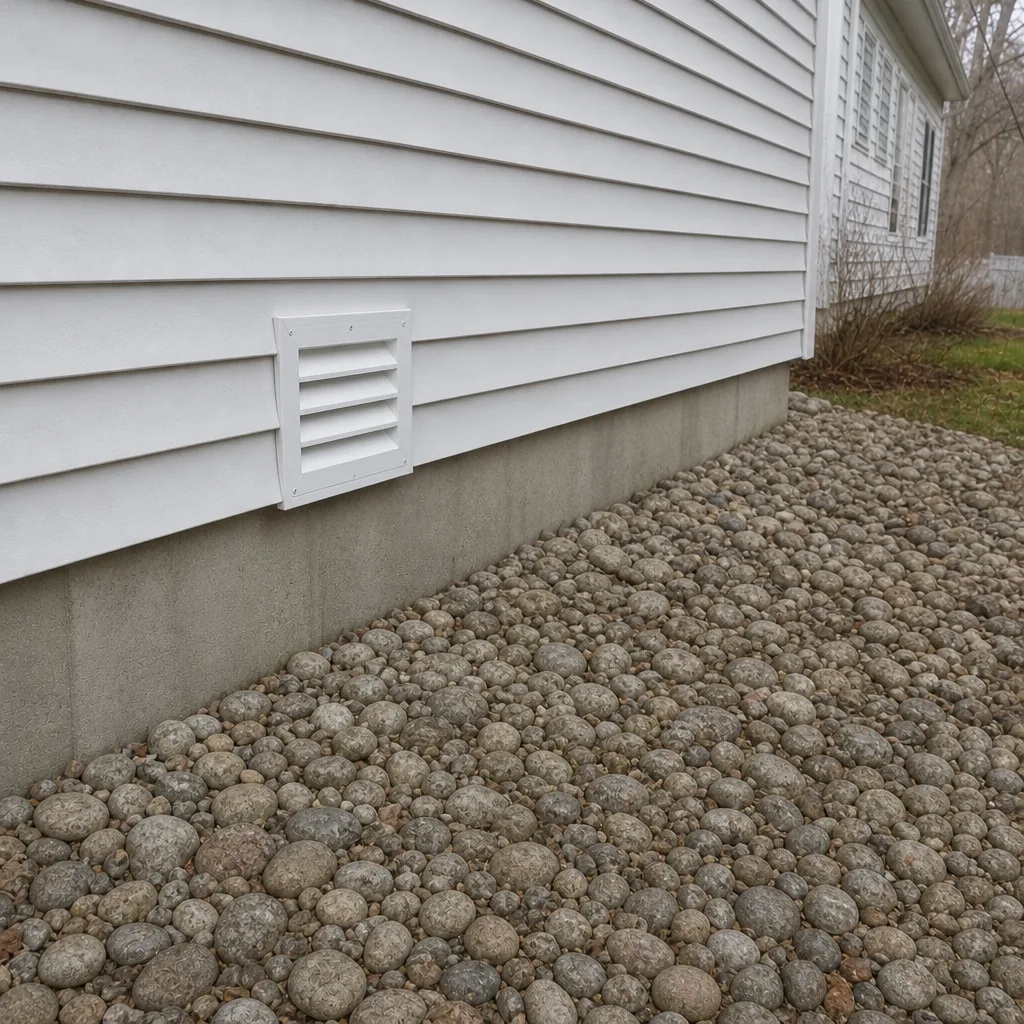 After
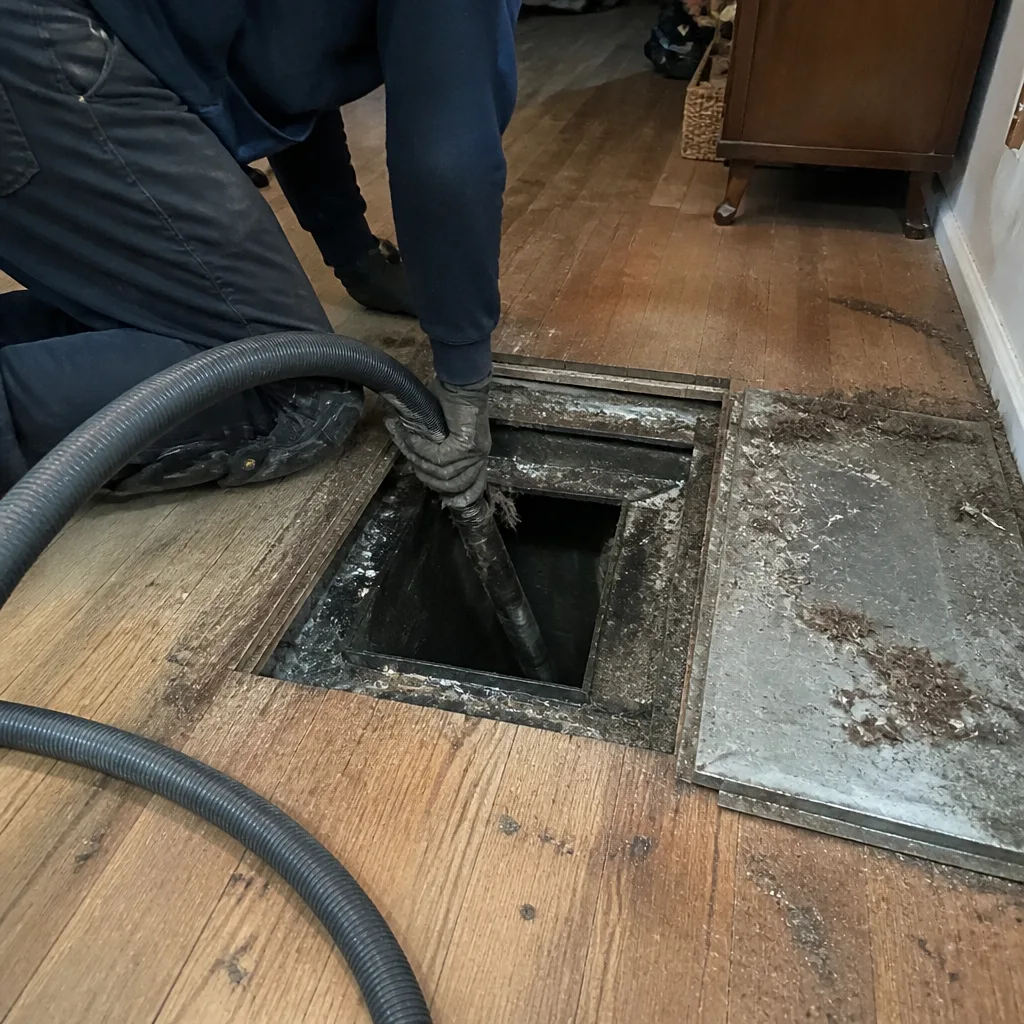 Before
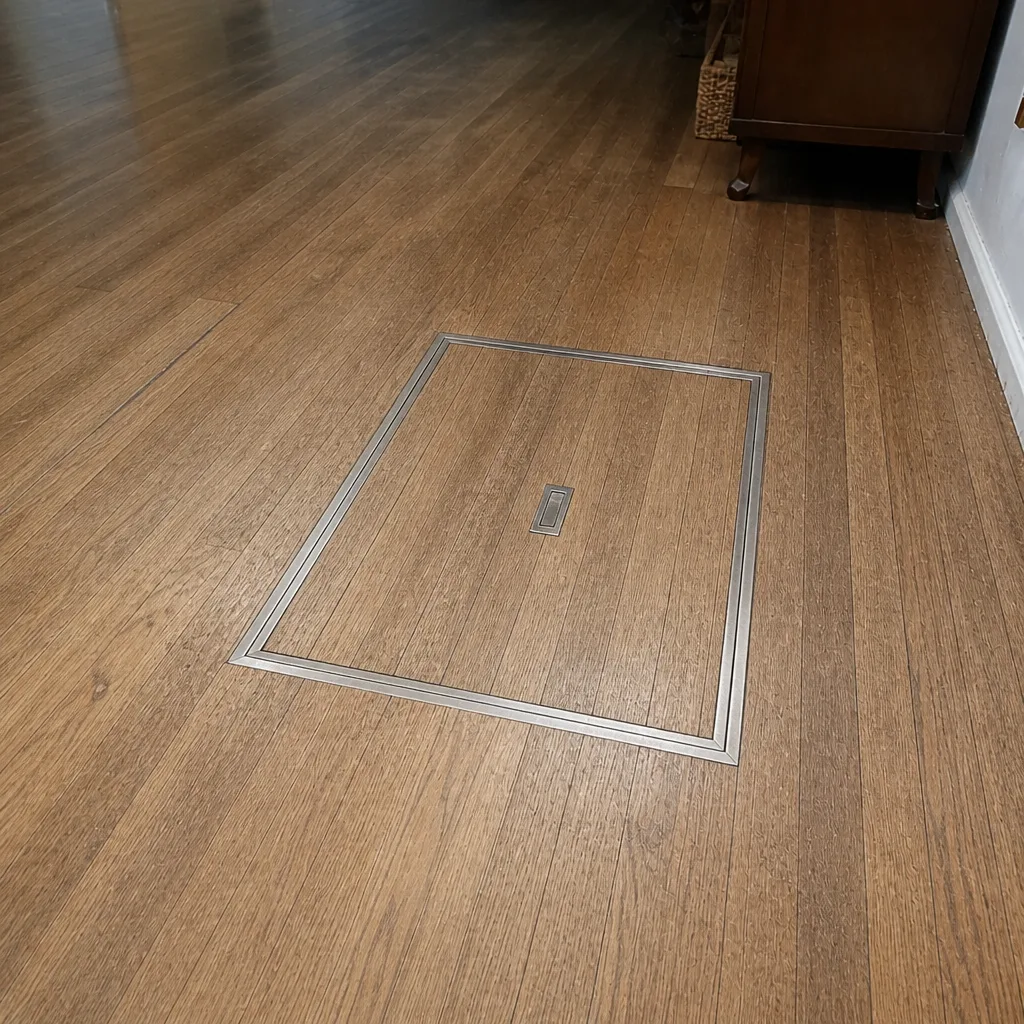 After
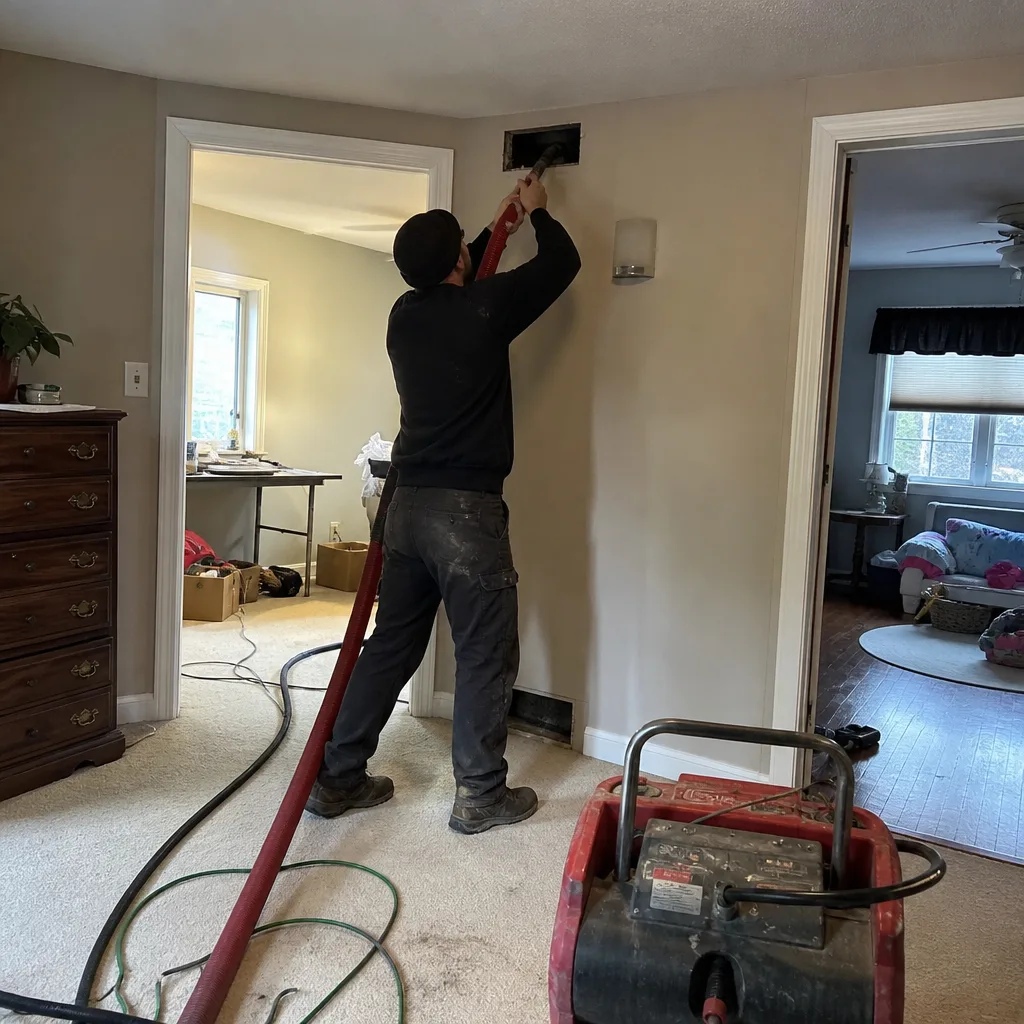 Before
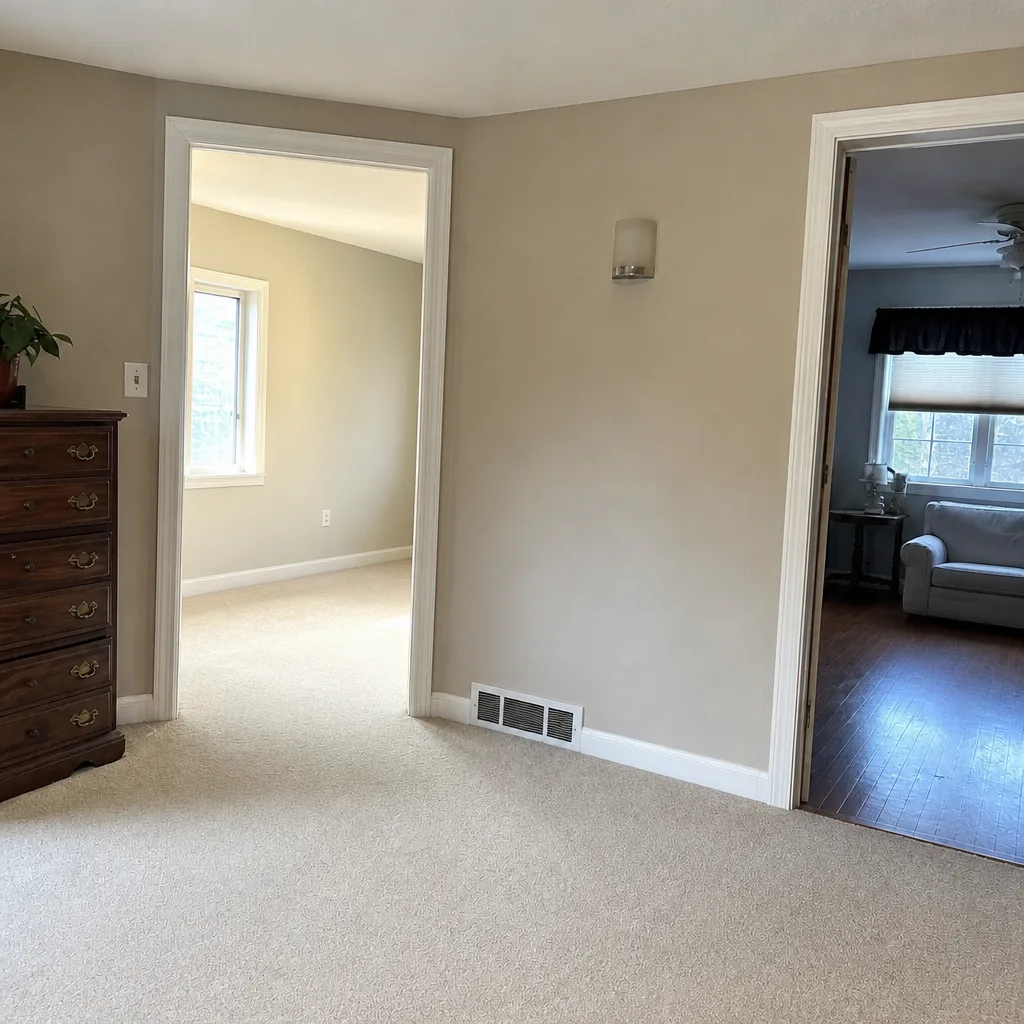 After
When to Call a Professional
Some signs in a Manchester home clearly point to a professional assessment rather than a rental unit. The main ones:
- Visible debris inside the trunk line or at the plenum connection
- A recent renovation that sent drywall dust through the entire system
- Dust appearing in every supply register rather than one or two
- A dryer taking longer than usual, or the vent feeling warm to the touch
- Persistent musty or smoky odor when the HVAC runs
- Any sign of a disconnected or damaged duct, especially on flex runs
Grafton Air Duct Cleaning offers free estimates in Manchester. Call (833) 865-1627 to schedule an assessment. We answer 24/7. Fast dispatch from 7am to 7pm, Sunday through Friday. Our technicians have up to experience, and every job is one flat price per system agreed in writing before work starts.
Frequently Asked Questions
You can clean a single register and a short section of branch duct, but you can’t clean the system. A shop vac generates roughly 1 to 2 inches of water column of suction, while the debris in your main trunk line needs 8 to 12 inches of negative pressure to overcome ambient air infiltration and travel toward the vacuum. Call (833) 865-1627 for a free estimate if the buildup is system-wide.
No, they’re built for branch-level work and one-off spills, not whole-system extraction. They don’t have a sealed vacuum connection at the main line and they can’t verify with a camera, so you can’t confirm what was actually removed. Call (833) 865-1627 for a free estimate on real whole-system cleaning.
Snagging a flex duct connection at the plenum. Manchester homes with retrofit flex duct often have zip-tie and tape joints that a shop vac nozzle can pull apart, and a disconnected duct is worse for air quality than a dirty one. If you suspect a broken connection, call (833) 865-1627 for a repair assessment before any cleaning.
Ask for before-and-after photos of your own ducts, ideally taken from the same positions, and a camera inspection of the main trunk line. Our work includes before-and-after photos of your specific system, and every job is a single flat price agreed in writing. Call (833) 865-1627 for a free estimate.
Usually because they’re teaser prices: a low per-vent rate that becomes a much larger invoice once the technician is on site. A real whole-system price for a Manchester home typically falls in the $350-$600 range for standard single-family systems. We quote one flat price in writing before work starts. Call (833) 865-1627 for a free estimate.
Any time a duct is visually disconnected, torn, or clearly leaking at a joint. Cleaning a compromised system just re-contaminates it. We offer air duct repair as a named service, not just cleaning, so the assessment can catch it before the money is spent. Call (833) 865-1627 for a free estimate that includes a repair evaluation.
The Bottom Line
The DIY-versus-professional question in Manchester homes is really a physics question dressed up as a money question. A shop vac doesn’t fail because it’s weak, it fails because your duct system is larger than it and can’t be sealed with a household tool. If the problem is one spilled bucket of drywall dust and one register, handle it yourself and be thorough. If the accumulation is system-wide, if it’s post-renovation, if a dryer is running warm, or if you can’t tell where the problem ends, that’s the point to call. Repair before cleaning, verification after every job, and a flat written price before anyone picks up a hose. That’s the standard the work deserves.
Call (833) 865-1627 for a free estimate. We answer 24/7. Fast dispatch from 7am to 7pm, Sunday through Friday. We’re licensed & insured and we’re happy to walk you through the scope of your own system before you commit to anything.
Written by the team at Grafton Air Duct Cleaning.