
Last updated November 15, 2026
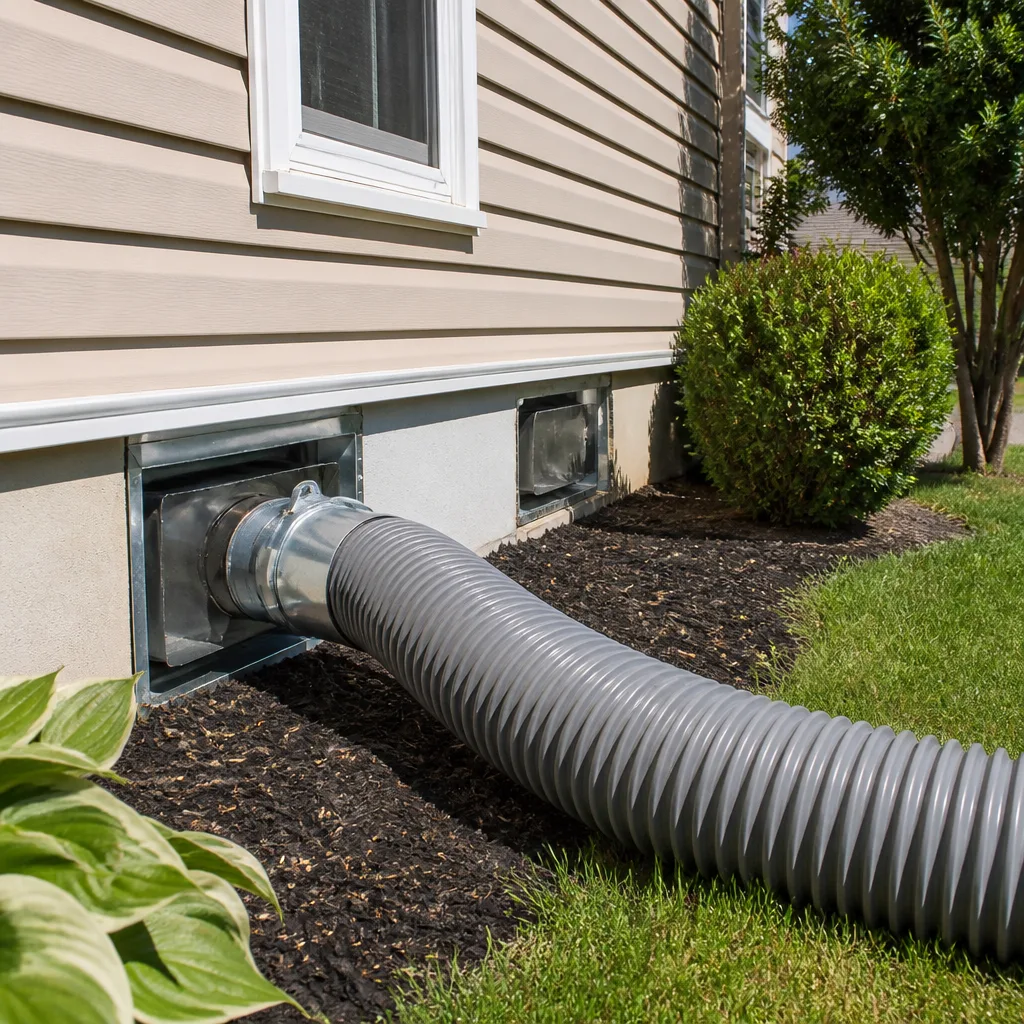 Whole-home duct cleaning
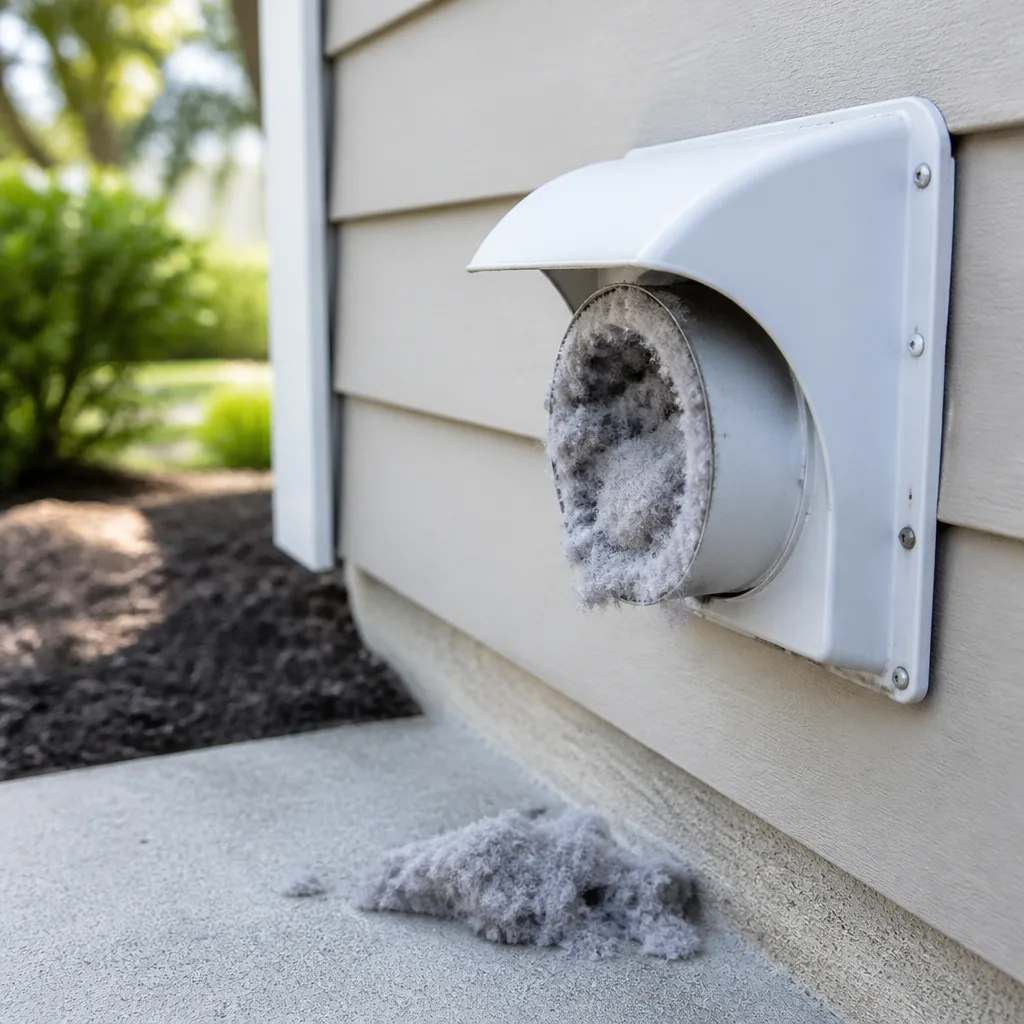 Dryer vent cleaning
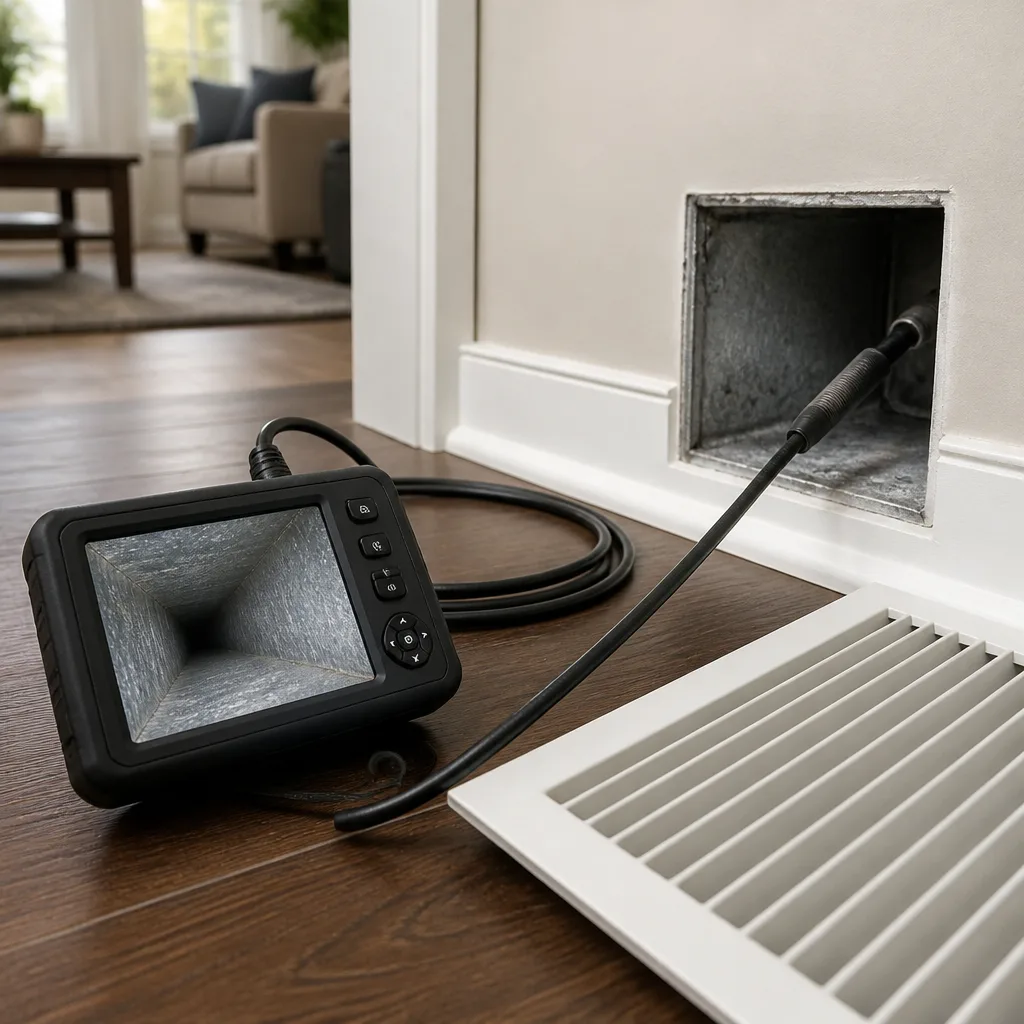 Camera inspection
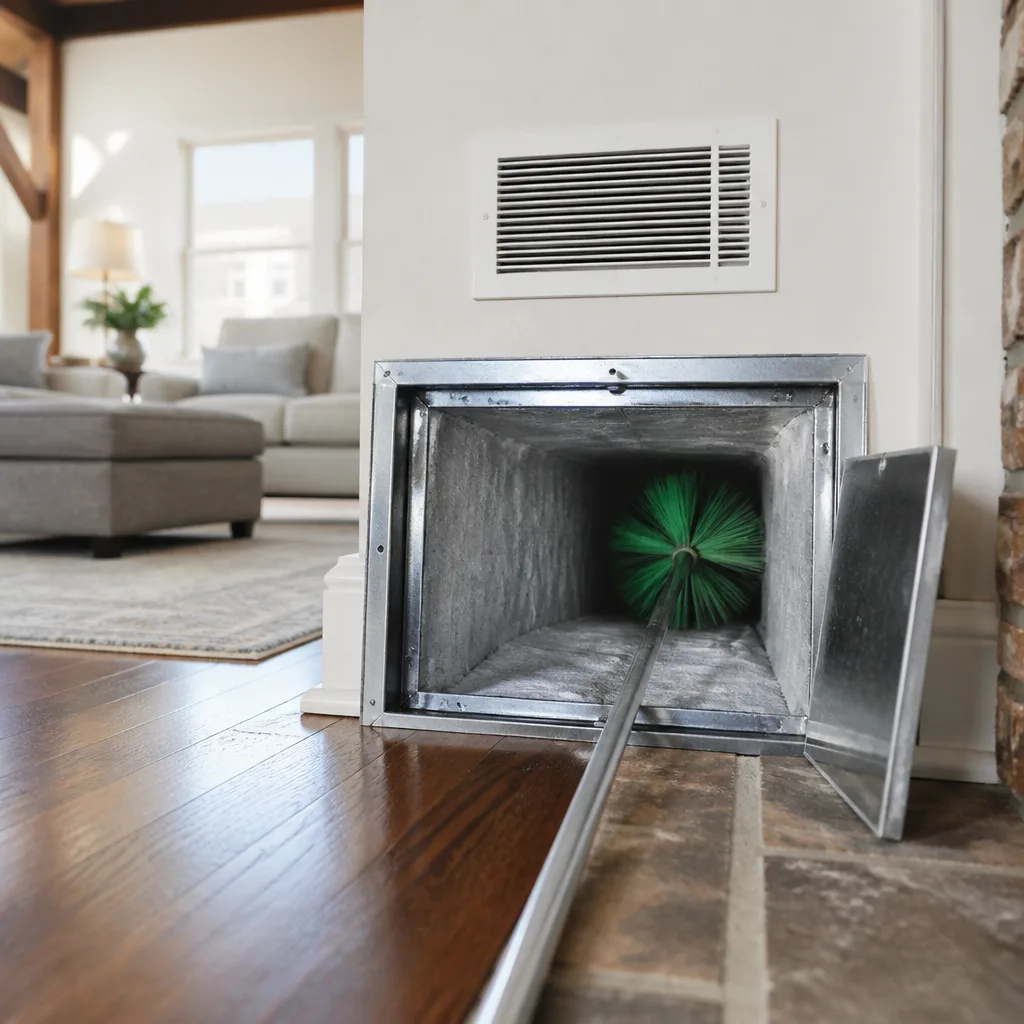 Sanitizing & deodorizing
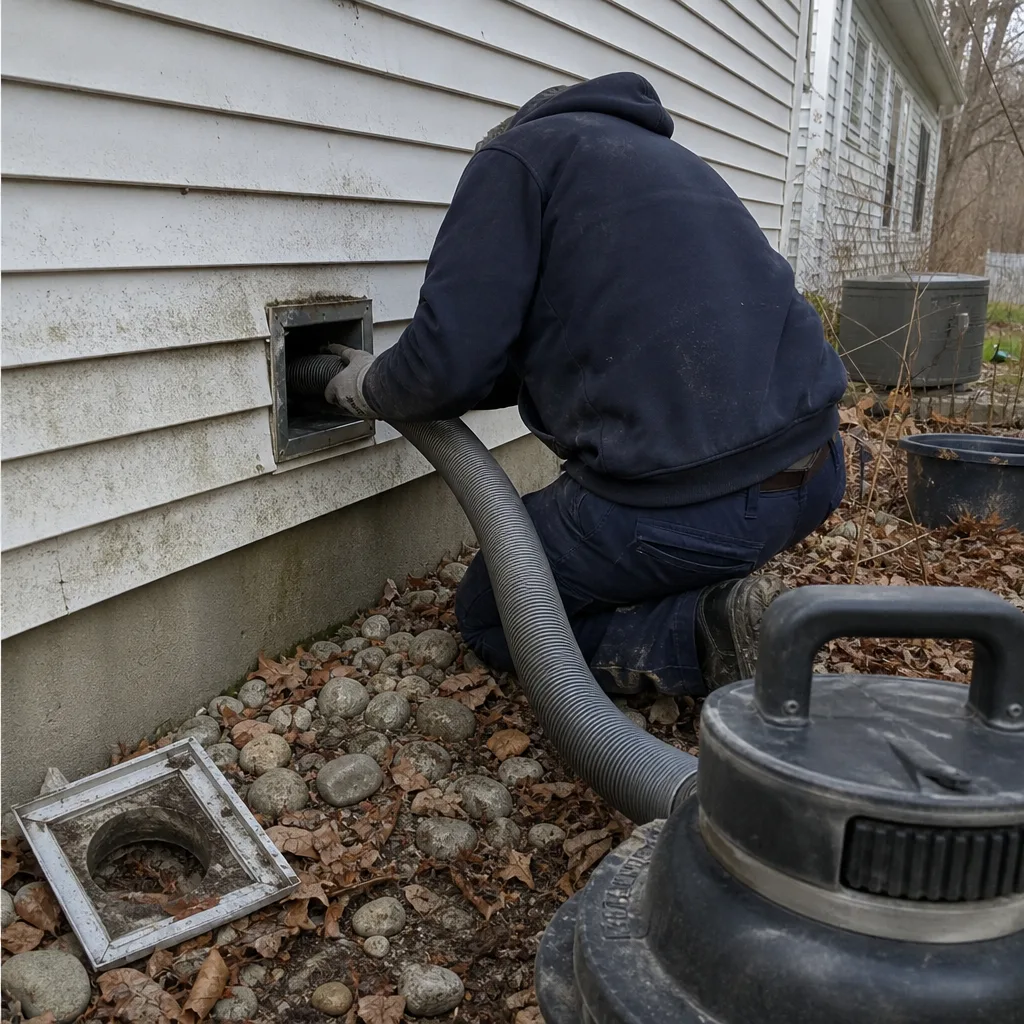
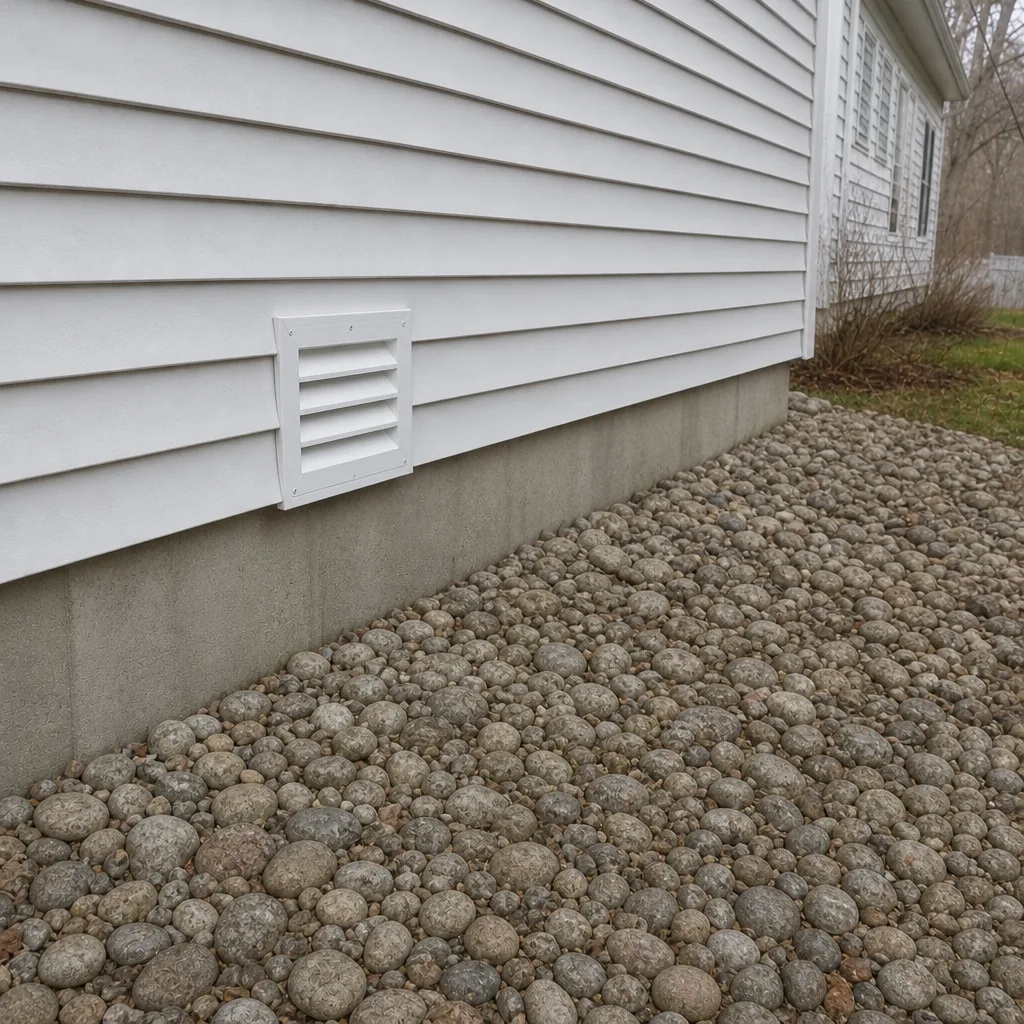
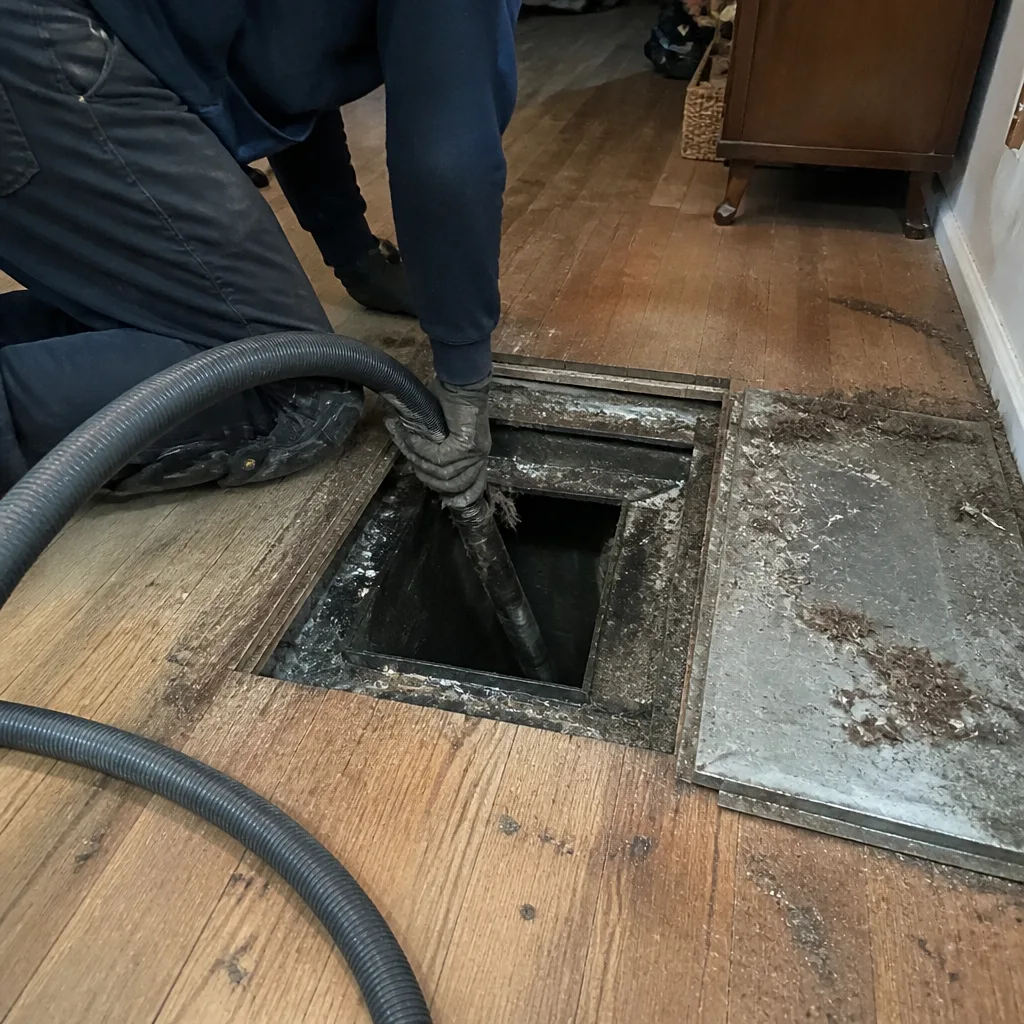
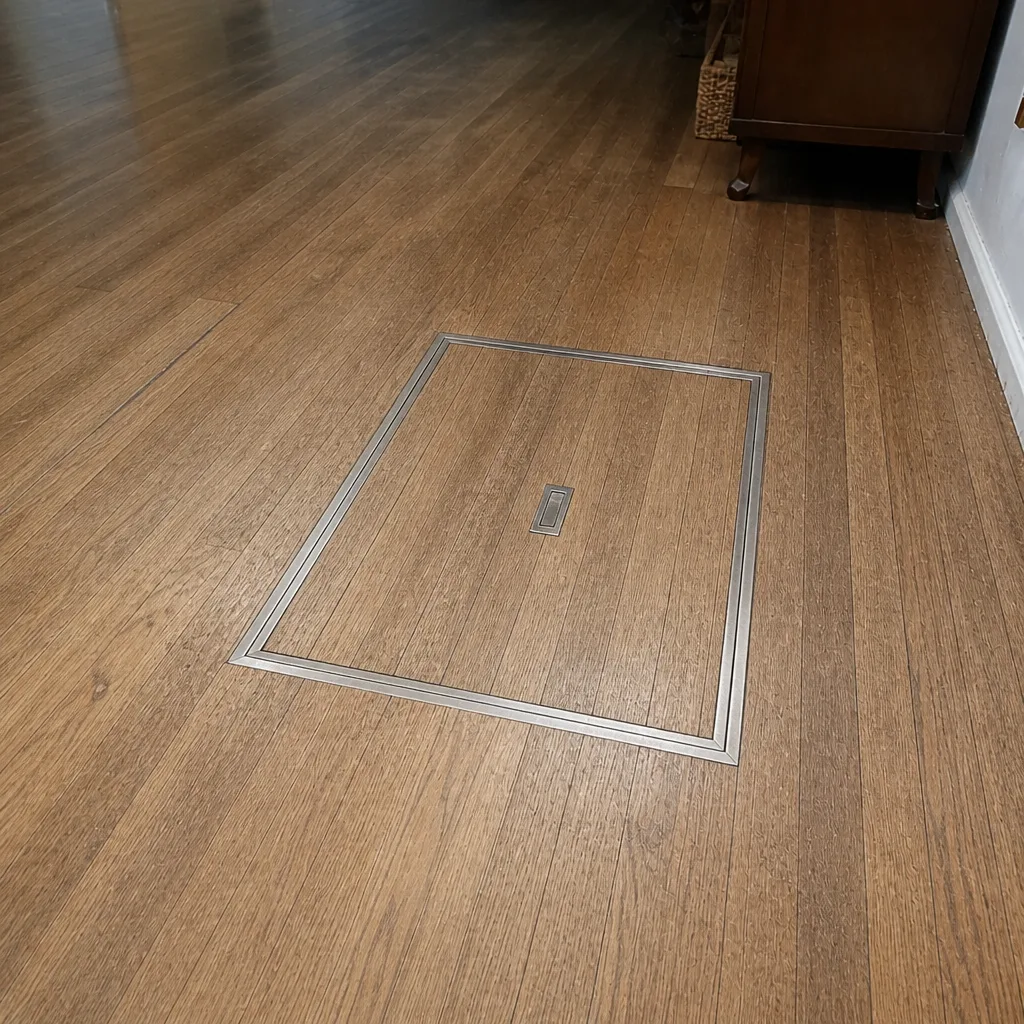
Whole-system duct and dryer vent check with before-and-after photos - you see exactly what came out of your vents
That "$99 whole-house special" is a bait ad - the real number appears once they are in your hallway, or the "clean" is a shop-vac at the register. We photograph the inside of your ducts before and after instead.
The Complete Guide to Air Duct Cleaning in Manchester
Most homeowners in Manchester who’ve paid for duct cleaning got a vacuum and a brush, not an inspection. They watched a technician run a hose through a few floor registers, saw dust rise into the machine, and assumed the job was done. What they never saw was the inside of the supply trunk, the condition of the branch lines feeding upstairs bedrooms, or the return plenum that pulls air back through the system every cycle. That’s the gap this guide addresses. You’ll learn what a complete cleaning actually involves mechanically, how Manchester’s older housing stock shapes the work, when cleaning alone won’t solve the problem, and how to tell the difference between a thorough job and a cosmetic one before you book.
Styles & brands we work with
- Whole-home duct cleaning
- Dryer vent cleaning
- Camera inspection
- Sanitizing & deodorizing
Quick Answer
A complete air duct cleaning in Manchester involves creating negative pressure in the duct system, mechanically agitating debris from the supply trunks, branch lines, and return plenums, and extracting it through a HEPA-filtered vacuum. A proper job starts and ends with camera inspection so you can see what changed. Cleaning alone doesn’t fix disconnected or leaking ducts; those need repair or sealing alongside the cleaning.
Table of Contents
- What a Complete Air Duct Cleaning Actually Involves
- Why Negative Pressure Comes First
- Agitation Methods: Rotary Brush vs. Air Whip
- What Camera Inspection Reveals (and What Gets Missed Without It)
- Manchester Housing Stock and Your Duct System
- Supply Trunks, Branch Lines, and Return Plenums: Why All Three Matter
- When Cleaning Isn’t Enough: Duct Repair and Sealing
- Common Mistakes to Avoid
- When to Call a Professional
- Frequently Asked Questions
What a Complete Air Duct Cleaning Actually Involves
A complete cleaning is a three-stage mechanical process, not a single pass with a vacuum. The three stages are always the same: create negative pressure, agitate the debris loose, and extract it through a HEPA filter. Skip any one and the job is incomplete. Most homeowners who’ve had their ducts cleaned have only seen stage three, because the vacuum is the loud, visible part.
Here’s the full sequence, in order:
- System assessment. The technician maps your duct runs, identifies accessible cleanouts, and checks the air handler and return for obvious disconnects or damage.
- Negative pressure setup. A HEPA-filtered vacuum is connected to the main trunk or air handler opening, pulling the whole system into negative pressure.
- Branch line agitation. From each supply register, the technician feeds a rotary brush or air whip through the branch line, loosening compacted debris that’s stuck to duct walls.
- Trunk line cleaning. Larger rotary brushes run through the main supply trunk, which typically carries the heaviest accumulation.
- Return plenum cleaning. The return side takes in air from every room, so it’s often the dirtiest section. It needs the same agitation and extraction.
- Camera verification. Before-and-after footage of representative runs documents what was actually removed.
In our experience, homeowners in Manchester who’ve paid for cleaning before often never saw stages two through five. If nobody agitated the branch lines from each register and then extracted, the debris that was there before the visit is still there after it.
Why Negative Pressure Comes First
Negative pressure is the foundation of the whole process. It means the entire duct system is being pulled inward by a HEPA-filtered vacuum so that when agitation loosens debris, the debris travels toward the machine, not into your living room. Without it, brushing a duct is like dusting a shelf with a fan blowing on it.
There are two parts to getting this right. First, the vacuum must be sized to your system. A unit that’s too small can’t keep up with the air volume a whole-home duct network holds, and negative pressure collapses as soon as the brush starts moving. Second, the filter has to be HEPA-grade. A lower-rated filter catches visible dust but lets fine particulate back into the airstream, which then settles in rooms on the return cycle.
Professional-grade equipment anchors this. Rotobrush and Nikro systems are built specifically for residential duct networks – one person running agitation and extraction from a single control point. Consumer equipment and generic blowers don’t reach the pressure or the filtration standards a full-system clean requires. When someone quotes a job with a shop vac and a hose, that’s a different service than a negative-pressure clean.
During a Manchester job, negative pressure also matters because of how the city’s older ranch and split-level homes are laid out. Returns are often undersized or positioned centrally, which means air is pulled across longer runs before it reaches the air handler. When a system is under negative pressure, those long runs get agitated properly instead of being bypassed.
Agitation Methods: Rotary Brush vs. Air Whip
Two agitation methods matter: the rotary brush and the air whip. Both are professional tools, and both loosen compacted debris from duct walls. The right choice depends on the duct material, the branch line diameter, and the level of contamination.
Rotary brush. A flexible shaft with a spinning brush head feeds through a branch or trunk from a register or cleanout. The physical contact breaks up stuck-on dust, lint, and fine particulate. It’s the better tool for supply trunks, rigid metal ductwork, and branch lines where debris has caked onto the sheet metal.
Air whip. A compressed-air line with flexible whips at the tip, driven by high-pressure air. It spins inside the duct and knocks debris loose from every angle without scraping the duct interior. It’s often used for flexible duct runs, where a stiffer rotary brush could abrade the liner.
What most homeowners never see is that some companies only agitate the runs that are easy to reach, then assume the return and trunk work got done by the same pass. They don’t. Each section needs its own tool run from its own access point. That’s why a thorough job takes hours, and why a cheap job finishes in under an hour.
On Manchester builds from the 1970s through 1990s – a big chunk of the city’s housing stock – flexible duct became common for the last drop to each register. That means an air whip is often needed for the last leg, and a rotary brush for the trunk it connects to. We carry both because a single-method job leaves one part of the system untouched.
What Camera Inspection Reveals (and What Gets Missed Without It)
Camera inspection is the difference between a cleaning and a diagnostic service. A small camera fed through a duct or a register reveals the actual condition of the duct interior – not just whether it looks dirty, but whether it’s cracked, disconnected, crushed, or contaminated with material that cleaning alone won’t remove.
Before the job, the camera shows:
- Whether debris is dry dust, caked-on lint, or something biological that requires different treatment
- Whether the flex duct is torn or the metal is corroded
- Whether a branch line is actually connected to the trunk, or has popped loose behind drywall
- Whether the return plenum is dirtier than the supplies – which changes the priority of the cleaning plan
After the job, the same camera pass shows what was removed. Before-and-after footage of your own ducts is the only real proof of the work. Without that record, a cleaning company can tell you it was done; with it, you can see it.
What gets missed without a camera is straightforward. A duct that looks clean at the register can be disconnected two feet deeper into the wall – meaning conditioned air is being dumped into a joist bay instead of the room. A cleaning crew that doesn’t check would agitate that branch, extract nothing, and leave with the system still broken. This is the reason Grafton Air Duct Cleaning treats camera work as part of every job, not an add-on.
Manchester Housing Stock and Your Duct System
Manchester’s housing stock shapes duct cleaning in ways that generic guides ignore. The city has a dense mix of ranches, split-levels, and older two-story homes built between roughly 1950 and 1990, plus a large number of renovated multi-family conversions in older neighborhoods. Each of those shapes what a cleaning job actually looks like.
Three patterns show up repeatedly:
- Ranch-style returns. Ranch homes often have a single large central return grille feeding the air handler, with undersized or non-existent returns from bedrooms. That one return carries enormous air volume, so it accumulates the heaviest debris load in the system. Skipping the return plenum on a ranch home is skipping the dirtiest part.
- Poorly balanced forced-air systems. In homes built from the 1970s through the 1990s, ducts were often sized to a rule of thumb rather than a Manual D calculation. Some branch lines get far more airflow than the rooms they serve, others barely any. The high-flow branches collect more dust faster, and the low-flow branches go long stretches with almost no air movement – meaning debris sits and compacts.
- Post-renovation dust loads. Manchester has a steady stream of kitchen and bathroom remodels in older homes. Drywall dust, sawdust, and construction debris get pulled into the return system during the work, then settle inside the ducts once the fans cycle. That dust load is heavy and it doesn’t clear itself.
Cold New Hampshire winters add another layer. Windows stay shut from November through March, so the same air recirculates through the duct system for months at a time. Whatever is in the ducts gets cycled through the house repeatedly. That doesn’t automatically mean you need cleaning, but it does mean the condition of the duct interior matters more here than in a climate where windows stay open.
Supply Trunks, Branch Lines, and Return Plenums: Why All Three Matter
Your duct system has three parts, and a complete cleaning covers all three. The supply trunk is the large main duct that leaves the air handler and moves conditioned air into the house. Branch lines are the smaller runs that take that air to each register. The return plenum is the ductwork that pulls room air back to the air handler for reconditioning.
Here’s why a partial job doesn’t work:
- Skipping the supply trunk leaves the heaviest accumulation in place. Debris that isn’t extracted from the trunk gets blown downstream into the branch lines as soon as the system runs – undoing the branch cleaning within a day.
- Skipping branch lines means each room still receives air through a contaminated duct. If only the trunk was cleaned, the first few feet of every branch are still coated.
- Skipping the return plenum is the most common shortcut, and it’s the biggest mistake. The return pulls air from every room in the house, so it carries the combined debris load. Cleaning the supplies and leaving the return alone means the system is still reintroducing dust to the air handler on every cycle.
In Manchester homes with a single central return, the return plenum is not a small afterthought – it’s often the dirtiest single section of the whole system. A cleaning quote that doesn’t specifically name the return side is quoting a partial job.
For a full picture of the service scope, see our air duct cleaning page, which walks through how the three-part standard applies to a typical residential job.
When Cleaning Isn’t Enough: Duct Repair and Sealing
Cleaning removes what’s inside a duct. It does nothing about a duct that’s disconnected, crushed, torn, or leaking at the seams. Those are repair problems, and they need to be solved before or alongside cleaning – otherwise you’re paying to clean a system that can’t hold air.
The most common repair issues we see in Manchester homes:
- Disconnected branch lines. Flex duct that has pulled off its boot or trunk collar is common in older homes and after renovations. Conditioned air is being dumped into an unheated crawlspace or joist bay. Cleaning that branch just means agitating debris that will re-accumulate immediately.
- Torn or crushed flexible duct. Flex duct gets crushed against framing, stepped on during prior work, or torn at bends. A crushed run can’t move air, and a torn run introduces attic or crawlspace air into the supply stream.
- Leaking seams and joints. Sheet metal duct joints that were taped decades ago lose their seal over time. Leaks pull in unconditioned air and dilute the system’s efficiency.
- Damaged boots and register boxes. A rusted or bent boot behind the register doesn’t hold the duct properly, no matter how clean the duct is.
This is why we repair ducts, not just clean them. If a camera pass finds a disconnected or damaged section, cleaning it without repair leaves the problem intact. Offering Air Duct Repair as a distinct service means one visit can correct the whole picture: extracting debris, sealing or reconnecting compromised sections, and verifying with a final camera pass that the system is clean and airtight. Many cleaning-only companies don’t carry the repair capability, which means you’d need a second contractor before the cleaning was even worth doing.
Common Mistakes to Avoid
- Booking on price alone without asking what’s included. A low quote that doesn’t specify the return plenum, branch lines, and camera inspection is likely a partial job. Ask for a written scope in advance.
- Assuming the technician went through every register. A cleaning that only touches the main trunk passes visual inspection but leaves branch line debris in place. Confirm the number of registers and returns being serviced in the quote.
- Skipping the return plenum on a single-return ranch home. In Manchester’s ranch housing stock, the central return carries the system’s heaviest debris load. If the return isn’t on the scope, the job isn’t complete.
- Cleaning an old system without checking for duct repair issues. Cleaning a disconnected or crushed branch line wastes the cleaning cost. Ask for a camera inspection before work starts.
- Not asking for before-and-after photos. Without documentation, you can’t verify what was done. A professional job includes footage of your own ducts.
- Ignoring the dryer vent. Dryer vent cleaning is a separate service from air duct cleaning, and it addresses a lint-related fire hazard that duct cleaning doesn’t touch. If lint is packing behind the dryer, that’s a dedicated job.
- Treating duct cleaning as a seasonal checkbox. Homes with pets, recent renovations, or anyone with allergies typically need attention more often than homes without those factors. There’s no fixed schedule that fits every house.
When to Call a Professional
Call a professional when you can see visible dust patterns on registers or notice dust building up on surfaces faster than usual. Call when a recent renovation sent drywall dust or sawdust through the return system. Call when anyone in the house has ongoing allergy-type symptoms that seem worse indoors. Call when the system has never been cleaned and the home is old or was previously renovated. Call when the dryer takes noticeably longer to dry clothes than it used to, which often means lint is restricting airflow – that’s a dryer vent cleaning job, and it’s worth acting on quickly. Call when a room doesn’t heat or cool the way it used to, which can mean a disconnected or crushed duct. And call when you’re not sure whether cleaning is the right answer at all – a camera inspection will tell you.
Grafton Air Duct Cleaning offers free estimates in Manchester – call (833) 865-1627. We answer 24/7. Fast dispatch from 7am to 7pm, Sunday through Friday. When we quote, we quote one flat price per system, agreed before work starts, and you’ll get before-and-after photos of your own ducts.
Frequently Asked Questions
Air duct cleaning in Manchester typically costs based on the size of the system and the amount of ductwork, not a per-vent rate. A single-family home generally lands in a middle range that depends on how many branches and returns are included, whether repairs are needed, and how much debris has accumulated. We quote one flat price per system based on the scope we see, agreed before work starts, and the written estimate sets the final price. Call (833) 865-1627 for an exact quote – estimates are free.
Cheap quotes usually leave out one or more of the three critical sections – the supply trunk, the branch lines, or the return plenum – or skip camera inspection entirely. A partial job takes a fraction of the time and never needs the same equipment. If a quote doesn’t specify which sections are being cleaned and doesn’t mention the return side, it’s likely not a full-system clean. Ask for the scope in writing. Call (833) 865-1627 to compare against a full-scope quote.
Before-and-after camera footage of your own ducts is the only reliable proof. A cleaning that produced no photographic record proves nothing. Ask for footage of the return plenum in particular, since it’s the section most often skipped and the one that shows the biggest cleaning result. If the company can’t provide before-and-after photos, treat the job as unverified. Call (833) 865-1627 – before-and-after photos of your own ducts come standard.
There’s no single interval that fits every Manchester home. Homes with pets, recent renovations, or family members with allergies typically need cleaning more often than homes without those factors. Homes with ongoing construction nearby or a poorly sealed system need it more often too. The honest answer is that condition – not a calendar – should drive the decision, and a camera inspection is what determines condition. Call (833) 865-1627 and we’ll tell you what the system actually needs.
Yes, if drywall dust or sawdust made it into the return system during the work. Construction dust is finer and heavier than household dust, and it settles inside ducts rather than clearing on its own. In Manchester’s older homes where remodels are common, we often find heavy post-renovation dust loads in the return plenum. Call (833) 865-1627 for an inspection before that dust gets cycled through the house all winter.
Register appearance tells you nothing about the duct interior. Debris accumulates on duct walls further upstream, and disconnected or damaged branches don’t show at the grille. The only reliable check is a camera inspection of the trunk, a representative branch line, and the return plenum. If the inspection shows the system is in good condition, we’ll say so. If it shows otherwise, you’ll see the footage. Call (833) 865-1627 for a free estimate.
The Bottom Line
A complete air duct cleaning is a specific mechanical process: negative pressure created across the whole system, mechanical agitation of every branch line and trunk, extraction through a HEPA-grade vacuum, and camera verification at the start and end. The three sections that must be covered are the supply trunk, the branch lines, and the return plenum – and Manchester’s ranch and 1970s-1990s housing stock makes the return side the most commonly skipped and the most important. When a camera reveals a disconnected or damaged duct, cleaning alone won’t fix it – that’s an Air Duct Repair job. If you’re ready to evaluate what your system actually needs, we offer free estimates in Manchester. Call (833) 865-1627. We answer 24/7. Fast dispatch from 7am to 7pm, Sunday through Friday.
For homeowners in nearby Suncook, the same full-scope standard applies.
Written by the team at Grafton Air Duct Cleaning.
See the difference
 Before
 After
 Before
 After
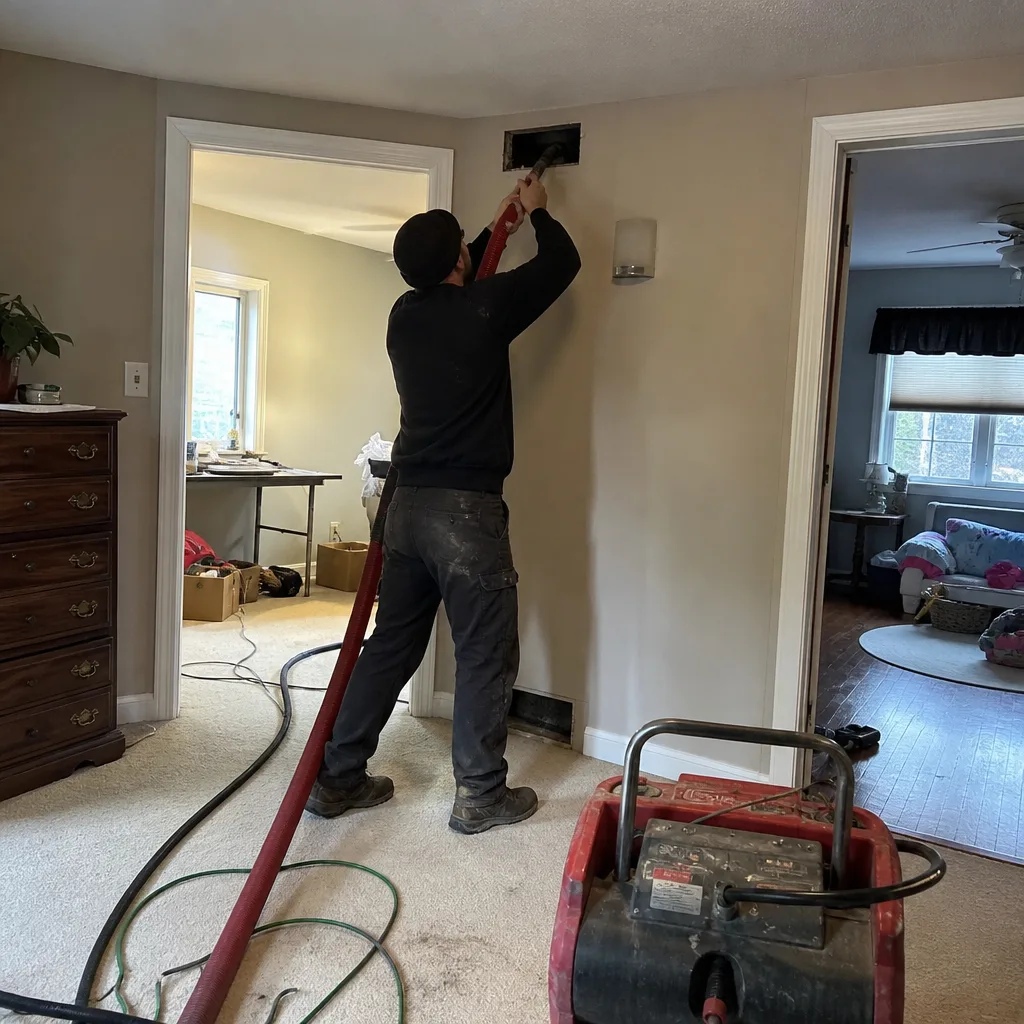 Before
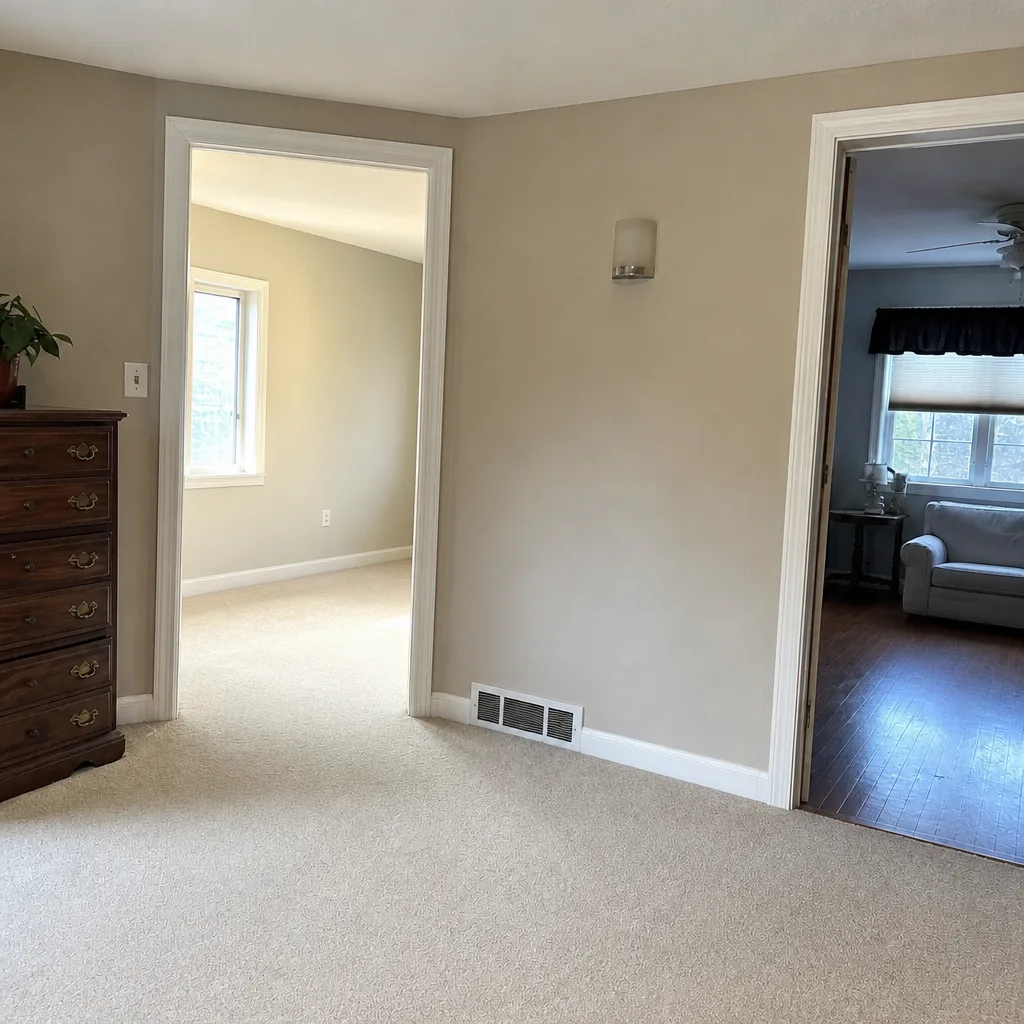 After